Vassal
The Legend of William OhA Vassal is a subordinate who pledges life and service to a Lord, turning personal allegiance into a structure the Tower can recognize as political authority. In practice, Vassalage is not merely ceremonial: it supplies the manpower, loyalty, and legal threshold through which a Climber can establish a Demesne and be acknowledged as a Lord.
Role in the Tower’s Political Order
The world’s hierarchy distinguishes between ordinary Climbers pursuing advancement and Lords capable of ruling territory. A Lord’s authority therefore depends on more than strength or reputation. The System requires a minimum number of Vassals before it will treat someone as a Lord, making sworn followers a measurable institutional condition rather than an optional ornament of status.
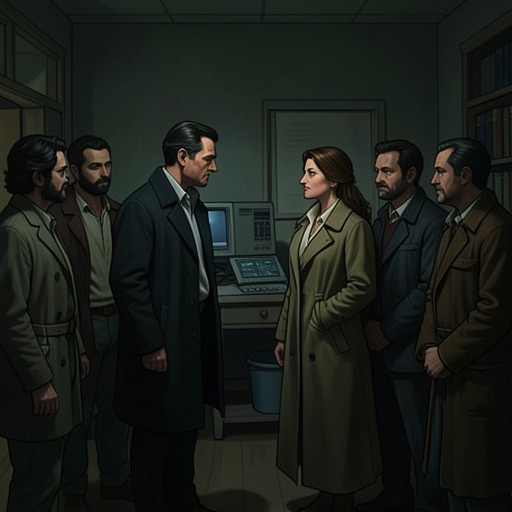
Vassals also appear within a broader chain of command. When the Kaith pushed into the First Floor, higher-level Climbers received an extermination order, while Nathan organized lower-level participants into a Quest to destroy the enemy’s supply lines rather than seek a direct battle. The resulting structure shows the difference between a temporary mission hierarchy and Lordship: Nathan could act as the veteran spearhead and babysitter for the operation, but that command did not by itself make him a Lord. Vassalage belongs to the more permanent system of personal and territorial rule.
Oaths and Recognition
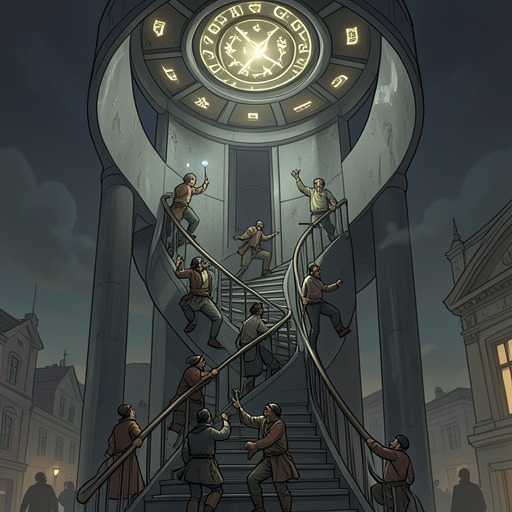
The clearest enactment of Vassalage occurs when Mark selects twelve young Climbers to become his first followers. He orders them to swear fealty, and they kneel together before pledging their lives to his service as Vassals, with the Tower named as witness. The oath functions as an act of speech that simultaneously declares allegiance and creates a political relationship; once spoken, the followers are no longer merely companions or hired participants but members of Mark’s emerging authority.
The number twelve matters because the System immediately confirms that the minimum Vassal requirement has been reached. It scans the surrounding Territory, finds no prior claim or residents, and asks whether Mark wishes to establish the location as his Demesne. Mark accepts and walks toward the throne overlooking the responsibility he has acquired. The sequence makes the causal order explicit: collective submission enables territorial claim, and territorial claim enables formal recognition as a Lord.
Service, Security, and Conflict
The value of Vassals is also visible in the dangers surrounding Lordship. Steve Holland warns that a Lord may have sent Vassals after William Oh, raising the possibility that subordinate forces can be deployed as instruments of coercion or assassination. William Oh responds by threatening to return the Lord’s daughter’s corpse, treating the suspected chain of command as part of a larger struggle of leverage and retaliation. Vassals therefore embody both protection and danger: they extend a ruler’s reach, but they can also make responsibility difficult to trace when violence is delegated.
A separate battle clarifies why organized followers are valuable. William Oh observes Climbers and veterans tearing one another apart around a toppled palanquin, then recognizes that no one would fight to the death merely for a busload of non-combat Classes. He concludes that the group could allow a Lord to write those people off as dead while secretly establishing a Stronghold from which an attack on a rival could be staged. In this political environment, people, transport, and territory can all serve a Lord’s strategic design; Vassals are the loyal human infrastructure that turns such designs into action.
Contrast with Temporary Party Structure
The campaign to break the Kaith supply lines provides a useful contrast. Nathan gathers new Climbers, explains that their task is to locate and destroy food routes through an extensive cave system, and explicitly warns them not to engage the Kaith directly. Later, after Nathan holds the bridge as a spearhead, the others are expected to return to the surface, bring him back the next day, and assemble the Parties when everyone is rested. This is disciplined cooperation, but it is temporary, task-bound, and organized around a Quest.
Vassalage is more binding and more consequential. A Party exists to complete an assignment; a Vassal serves a Lord and helps sustain a Demesne. The distinction becomes sharper as advancement continues. After reaching level five, William Oh receives a new Quest to ascend to the 2nd Floor and learns that he may follow established routes or clear a Key Site to open an inter-floor Door. Such expeditions test individual and party advancement, whereas Vassals provide the durable political base from which a Lord can claim and defend a place.
Political and Narrative Significance
The concept of the Vassal exposes the book’s fusion of adventure progression with feudal administration. The System presents advancement through prompts, quests, sacrifices, abilities, and level thresholds: a thumb-sized piece of pemmican placed on an Altar is consumed by a beam of light, yet the attempt fails because the sacrifice is suboptimal; later, the System asks a Climber to choose Primary Abilities and issues new Quests after milestones. Lordship follows the same logic. Allegiance is converted into an objective threshold, and the achievement of that threshold produces an administrative decision about territory.
This makes Vassalage the hinge between personal power and governance. A Climber can fight through caves, defend bridges, clear dangerous routes, or exploit the fast but perilous method of opening a Door through a Key Site. A Lord must additionally gather people who will bind themselves to his service and then accept responsibility for a Demesne. The twelve kneeling Climbers are therefore more than a crowd around Mark’s throne: they are the mechanism by which the Tower changes his status from powerful individual to recognized ruler. In this world, authority begins when loyalty becomes countable, sworn, and territorially anchored.